Tag: sailing

  • Race To The Straits 2025

    Race To The Straits 2025

    Day One

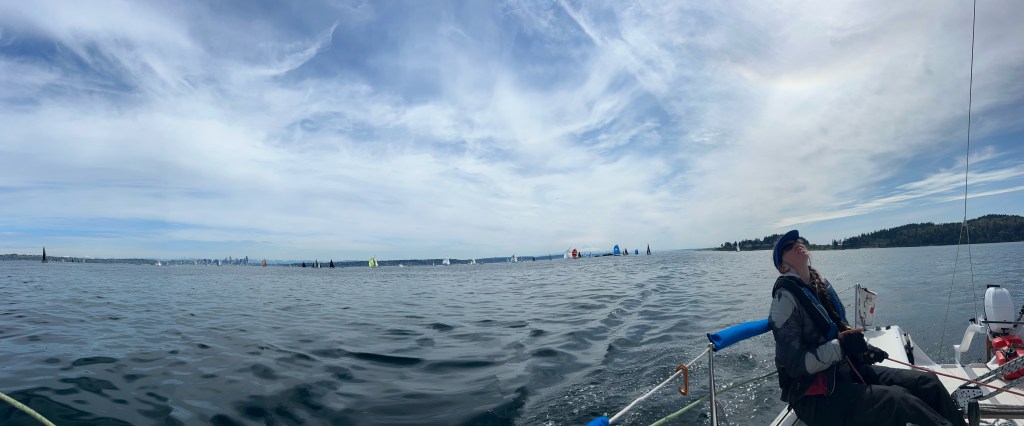
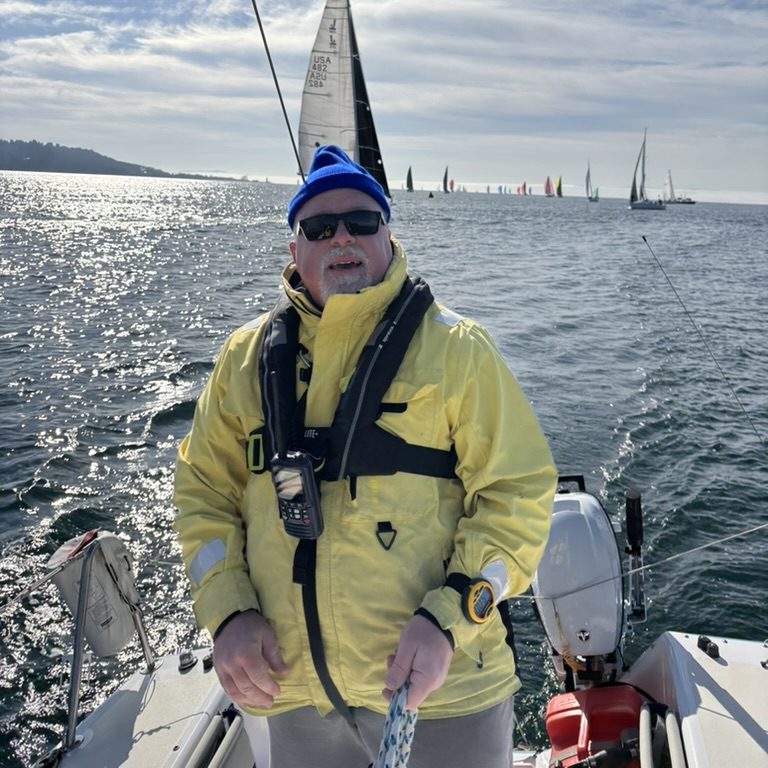
    It was Brian Stamper and I double handing this race. The forecast was for a very light northerly for most of the race, turning into what could be a 20 knot bruiser when we got to Port Townsend. The tide was also ebbing for most of the day, which meant that we would have a nice current push for much of the race on Saturday. With that in mind, we set off Saturday morning with the expectation that anything could happen.

    The Start – Fickle and Light
    We got off to a pretty good start. We were on the line, had the sails up and we crossed within a few seconds of our start time. The winds were very fickle. It was one of those starts where, if you were lucky, you caught a puff and could get away from the starting area and into the breeze. If you were unlucky, you sailed into a hole and were stuck on the starting line for 30 minutes. So depending on where you were in the starting sequence, you either got lucky or you did not. A lot of folks starting after us didn’t get lucky.

    Fortunately, the wind gods favored us. We had just enough breeze to get away from the start and get working up towards Kingston. A bunch of folks starting after us got shut down with no wind at all. So there was a big gap between the boats that started early and the boats that started later in the morning. In this case, that meant that the small boats (30 foot and under) got a really solid head start on the larger boats in the fleet. RTTS is a pursuit race, meaning it’s a timed start based on your boat’s handicap. The slower your boat, the earlier your start. So the little boats like us are always looking over our shoulders at the big, fast boats that start later in the morning.

    Zero Tacks Given
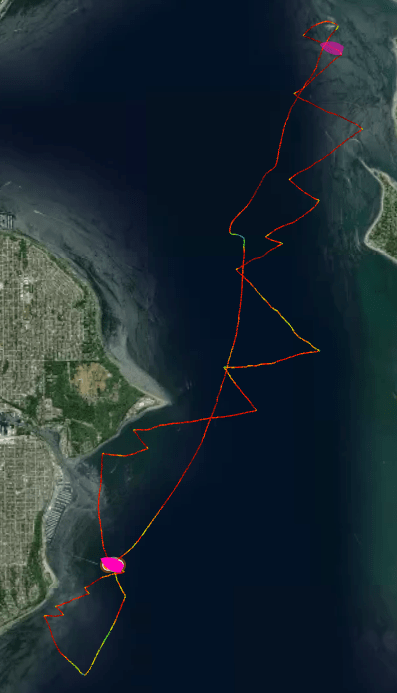
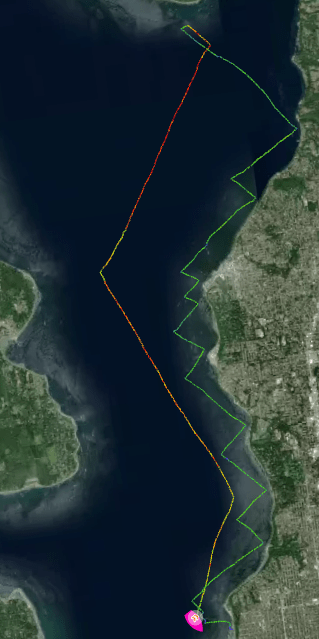
    We did our best to capitalize on that early advantage and the good news was that the wind was very consistent (if light) and we didn’t have to tack once from Shilshole all the way up to Double Bluff (our halfway mark). The wind ranged somewhere between 4 to 7 or 8 kts all morning. These were perfect conditions for our big #1. As we approached Double Bluff we saw that some of the boats ahead of us like Banana Stand, and Pell Mell were on port tack trying to make their way to the Mark. We could also see that the wind was shutting down and that it was very possible that they were not going to make the mark. That was compounded by the fact that the tide was going out (remember that tide I mentioned?) and there was a really stiff 2 knot current at Double Bluff. All of this meant that if you didn’t round the mark you got swept out into Admiralty inlet. I distinctly remember looking at Brian and agreeing, “Let’s not do that.”

    The Double Bluff Gut Punch
    We could see the quickly evolving situation and so we decided to tack toward Double Bluff early and make sure that we didn’t get swept past the mark ourselves. We got within 50 feet of the mark looking like we were going to do just fine…and then the wind shut down. And just like that we were screwed. We got swept past Double Bluff just like all the other chumps in front of us. Everyone who was swept, had to hoist their spinnakers and try to desperately claw their way back up to the mark in order to successfully round it. It was an unmitigated low speed disaster. A slow moving horror show. We had to try make multiple attempts at the rounding (probably six or seven times) only to be defeated by heavy traffic or the wind shutting down or by various and sundry other minor crises. In the end, it took us over an hour to make that mark rounding. I hate Double Bluff with a passion that defies description. In fact, I’m pretty sure I’ve got some feelings about that buoy that will require therapy.

    In the meantime, the entire fleet was coming up behind us. Seeing our ‘difficulty’ they made sure that they didn’t make the same mistake. We watched nearly 70 boats go around the mark successfully while we tried to claw our way back. It was one of the most humiliating experiences I’ve ever had (at least since last year’s RTTS). Finally, we rounded the mark firmly at the back of the fleet with absolutely no chance of recovering. We were completely and utterly defeated by the Double Bluff buoy. The fleet was over the horizon, and there was nothing to do but swallow our pride and follow the stragglers in to the finish.
    The Cost of Delay
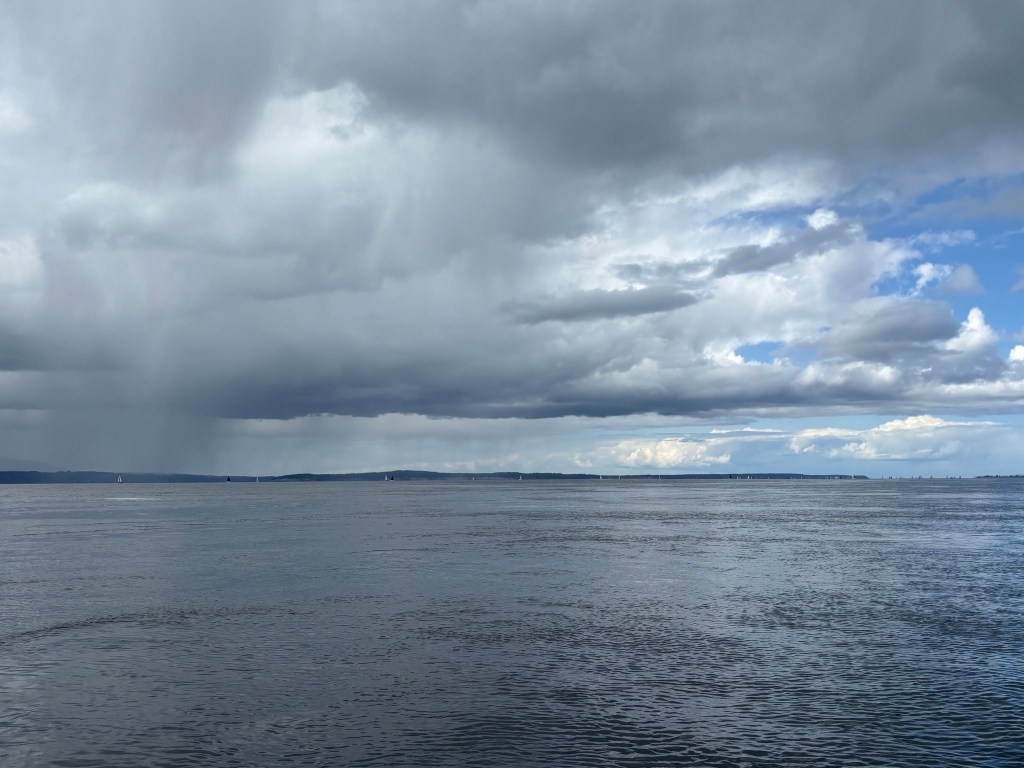
    Despondent, we continued to sail toward Port Townsend, trying the best we could just to finish. Brian and I were in that golden quiet space you arrive at when you are so spitting mad you can’t form coherent sentences. So of course, Mother Nature noticed our distress and gave us a little attitude adjustment by promptly dumping a big, fat, squall on us. One minute we are drifting in 5 knots of breeze, and the next, we hit a 20 knot squall. We got thoroughly soaked. Once we got out the other side of the squall, the wind shut down (of course) and we bobbed around for maybe 30 minutes before the wind picked up again and we made it back up to Marrowstone Point.

    The PT Finish
    Unfortunately, the wind shut down once again at Marrowstone Point and we sat in a kind of washing machine just outside of Port Townsend as the tide started to change. There were waves coming from all directions. At one point, I recall watching our windex spin in a complete circle. The sails were slatting uselessly. It was miserable. We sat there in “the bathtub of woe” for about an hour before the wind picked up again and we were able to very slowly crawl over to the finish line in Port Townsend, finishing roughly 80th out of a fleet of 102 boats. It was an ignominious end to what started off as a great day.

    Day 2
    Sunday morning arrived with a fresh 15 knot breeze from the west. The forecast was for steady breeze, sunshine, and a downwind run all the way home to Seattle. Perfect!

    The Start – Swept East
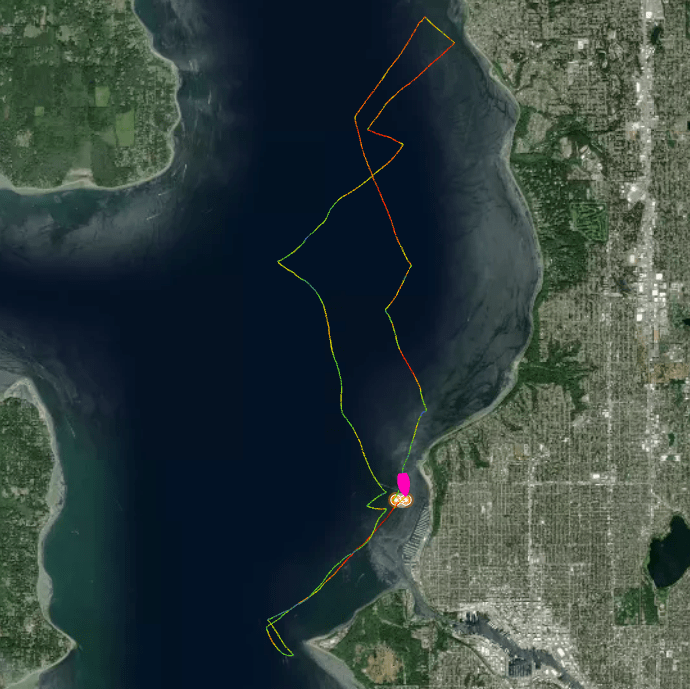
    We nailed the start and flew east under our asymmetric spinnaker down past Marrowstone Point and across Admiralty Inlet to the west side of Whidbey Island. Then we gybed right and pointed ourselves due south toward Seattle. The wind was a steady 12-14 knots and the tide was going to be ebbing against us the whole way back home. Given the freak show we experienced Saturday at Double Bluff, I naturally had some anxiety about rounding that mark again on day two. What would Double Bluff bring us today? Standing waves? A cross current? Flying monkeys? Call me a cynic, but my money was on the monkeys.

    An Epic Downwind Run
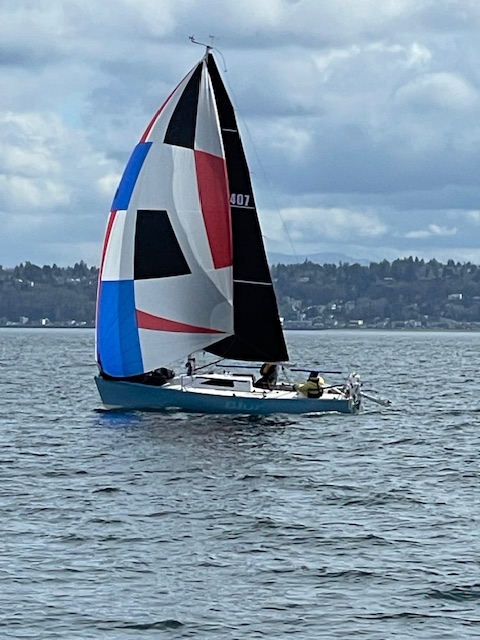
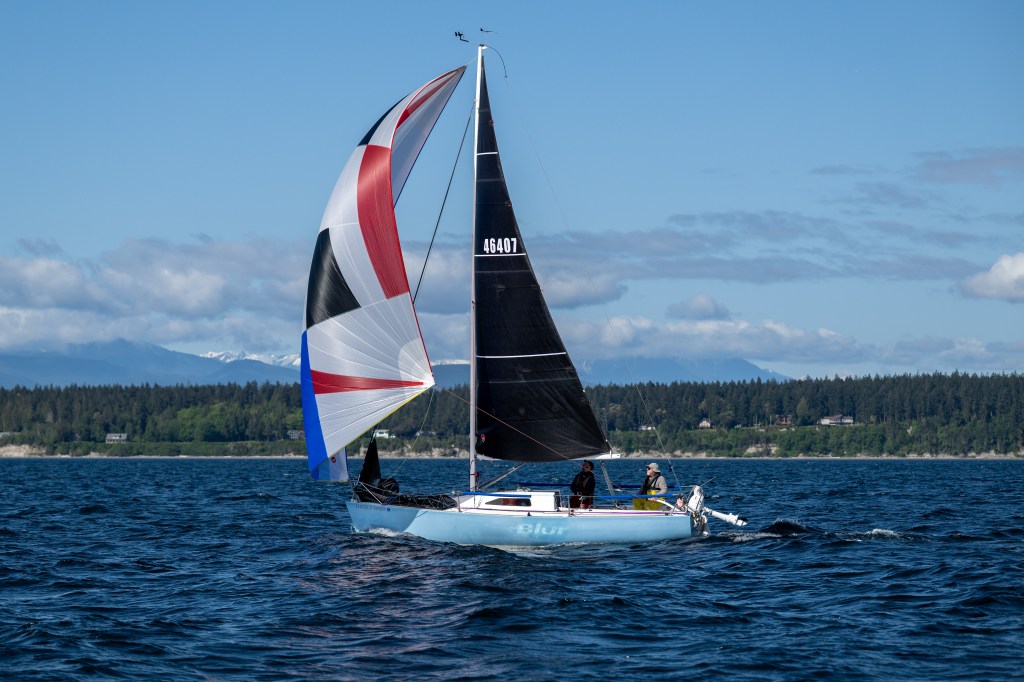
    It’s been a while since I’ve had a race that was just a solid day of downwind sailing. It was delightful. The wind was perfect, just enough to keep us hauling at hull speed, but not so much that we were fighting for control of the boat. We don’t normally sail Blur with an assymetric chute, but since we were double handing, it seemed the prudent thing to do. We didn’t have to fuss with a spinnaker pole, so no one had to go up on the foredeck for gybes. It’s a very safe and conservative way to sail the boat. Unfortunately, it’s not really the fastest way to sail the boat either.

    A Whale of a Good Time
    Somewhere around Bush Point we were treated to an Orca sighting right in the middle of the race. Fortunately the Orcas decided not use Blur as a chew toy. We did the best we could to give them a wide berth and continued on.

    Double Bluff
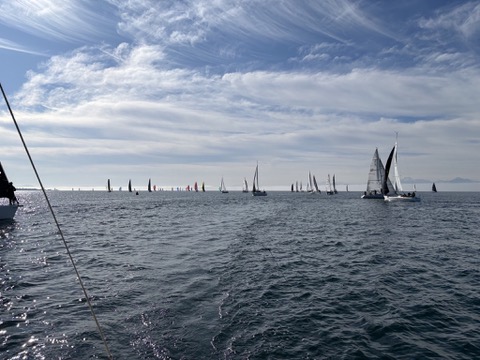
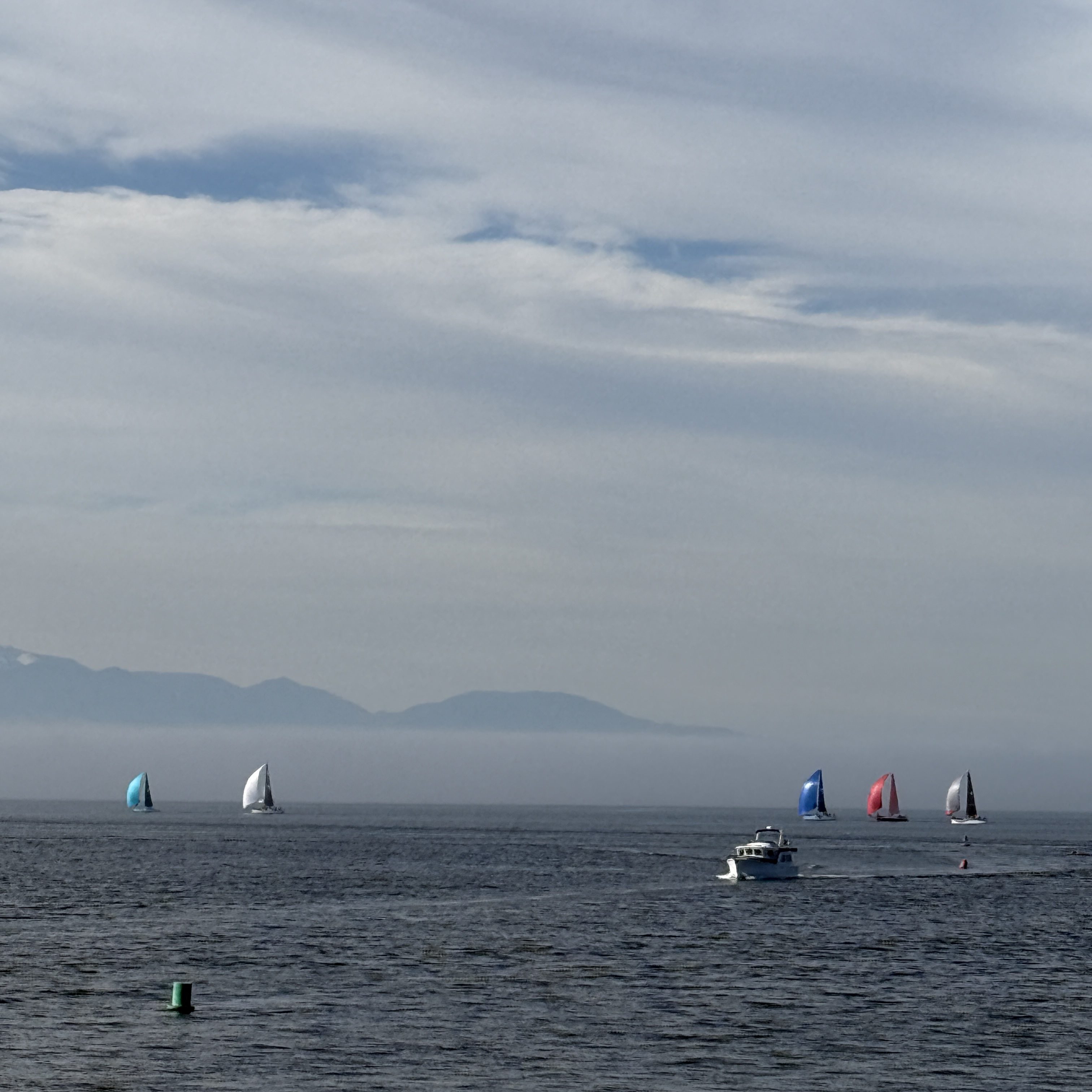
    As we continued southward, we approached Double Bluff with some apprehension. Any concerns turned out to have been completely unwarranted. I breathed a sigh of relief as we flew downwind past the mark without incident and headed across the inlet to Point No Point. The day was gorgeous, the horizon was filled with spinnakers, and the breeze promised to continue all the way home.

    Point no Point to Shilshole
    The fleet ran down the east shore of Bainbridge, past Kingston and then back across to Shilshole and the finish line. We ended up losing a lot of ground because the asymmetric spinnaker forced us to sail pretty hot angles. That was a learning experience. It’s a really nice sail, and it’s easy to use, but we learned that sometimes, a symmetrical spinnaker is the right one to use. We ended up coming in toward the back of the fleet once again. I would summarize Sunday as a beautiful day of sailing and a terrible day of racing. From my perspective, this puts it in the “win” column. This was probably the best RTTS I’ve sailed in years. There was some fantastic sailing on both days. There was drama, emotion, and lots of intensity. We learned a lot. I’m probably going to twitch every time somebody says, “Double Bluff!” And I guess that’s OK.

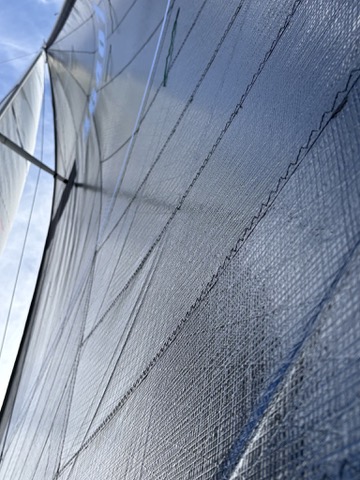
    Thanks to Brian for partnering and putting up with me for two entire days. Thanks to Ballard Sails for building the awesome sails that carried us on this adventure. And thanks to the Sloop Tavern Yacht Club for putting on yet another memorable race.
  • Blakely Rock Benefit Regatta: A Light Air Coin Toss

    Blakely Rock Benefit Regatta: A Light Air Coin Toss

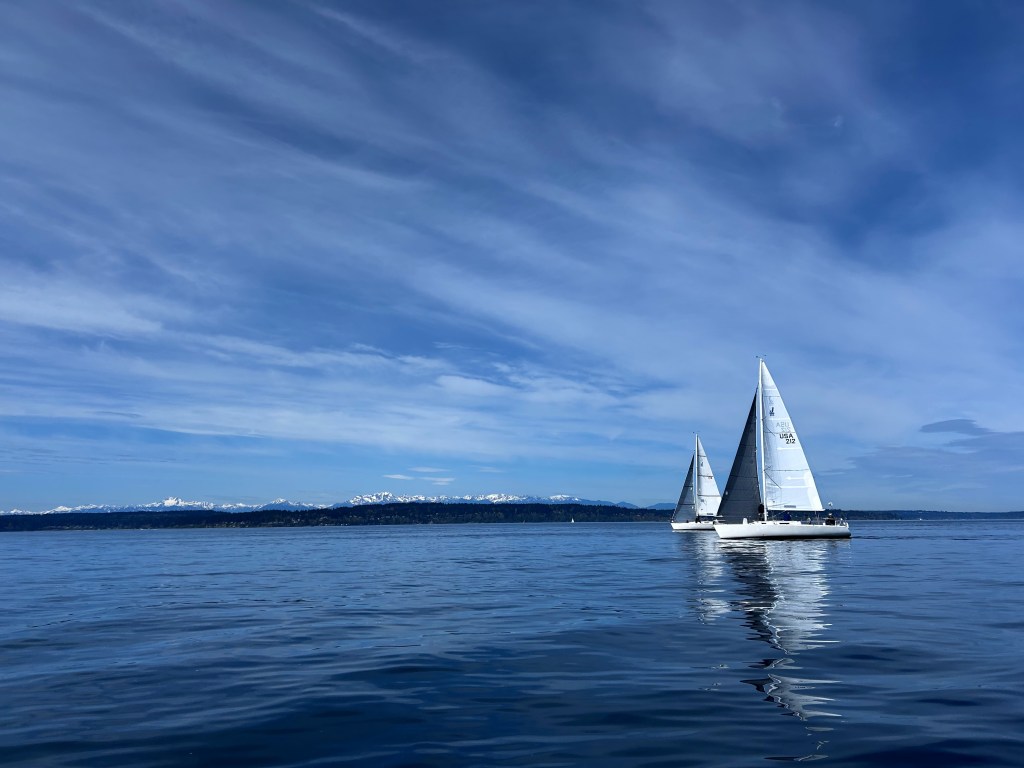
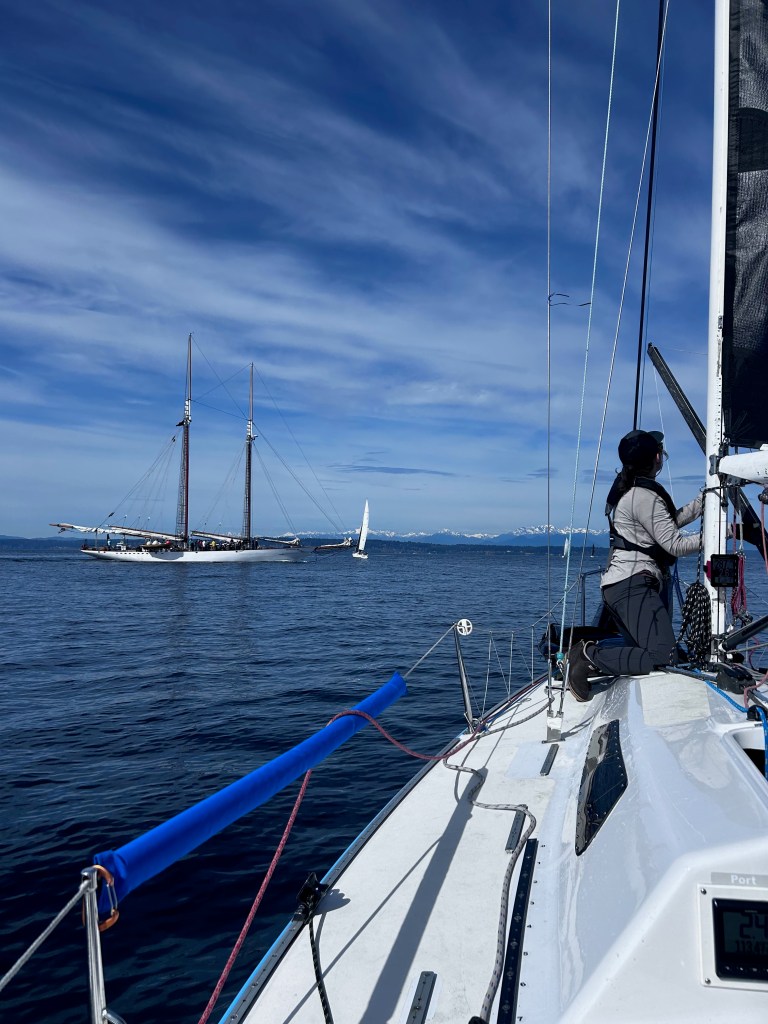
    I love a good light air race. The speeds and the forces are low, and the strategy is tough. Light air sailing takes a combination of patience and focus that just suits me well. However, there’s light air and then sometimes there’s no air. That’s how I would characterize this regatta. The race course was a patchwork of wind holes and gentle zephyrs. One minute, you are a genius: gliding along in your own private breeze. The next minute, you are an idiot: trapped in a windless hole watching the rest of the fleet sail around you. It was hard to make all the right moves. The good news was that it was an absolutely stunning day on the water. Both the mountains were out. Seventy degrees and flat out gorgeous!

    The start for the race was right up against the breakwater at Shilshole. Unfortunately, the start line was in a pretty bad wind hole at the beginning of the race. There was a little bit of wind at the pin end of the start line, but over by the committee boat there was none. The wind gauge read a solid, unforgiving, zero knots. So the obvious place to start was at the pin end. That’s where the smart place to be was. We watched the cruising class attempt to start. The horn went off and they…just sat there. No wind at all. We were next to start.

    For reasons that I can’t fully explain, I had steered us over to the committee boat side of the start in an effort to clear the start line. That’s where there was no wind at all. Not a good plan. I really wasn’t paying attention. I have no idea what I was thinking, but when the start horn went off, I was completely stalled out behind the committee boat on port tack. We went through the entire five minute start sequence, just sitting there chatting with the committee boat. A couple of boats were smart enough to squirt out on the pin end of the line. The rest of us all sat still, trapped on the start line, considering our life choices.

    About 5 minutes later, we got a small breeze and we crossed the starting line (technically in the next fleet’s start). We were a solid 5 minutes or so behind the smart folks, so we were playing a game of catch up. The good news is that the breeze held, and we worked our way up to Magnolia Bluff. As we did so, it became apparent that we had dialed in our trim settings pretty well for the conditions. We were sailing faster and higher than most of the fleet. We got up to Magnolia, and then tacked over to head to West Point. This was to be almost our last tack before reaching Blakely Rock. As we came up to West Point, the wind rotated to the east and we got lifted up to a heading pointing right at the rock.

    The ride up to the rock was pretty steady with no major wind holes or issues. We sailed it pretty well, and we were making ground on our competition ahead of us. The folks who got to the rock early, sailed into a hole, and so we ended up catching up with the folks who had the early lead. That felt pretty good! We rounded the rock in excellent position in contention for the top places in our fleet. We set the chute and headed downwind along the shore of Bainbridge island. Next stop, Meadow Point and then the finish line.

    This is where it all went wrong for us. There were basically two routes back to Meadow Point. You could sail along the shore of Bainbridge in a narrow band of wind on the west side. There was a big flat spot in the middle of the sound, and you could go toward downtown Seattle and take the eastern side of the sound. Most of the fleet was going to the east side (Seattle). We went west because the wind looked pretty solid. There was a flat spot we had to cross, and then we thought we would be home free to make it the rest of the way to Meadow Point. We watched some boats make it across the dead spot, so we tried to do the same. It didn’t work. We got about halfway across and the wind completely died. Zero knots of breeze. We came to a complete stop and watched all the boats on the east side sail past us. We were well and truly stuck. To say it was frustrating is an epic understatement. We could see wind on the water about 300 yards away. So tantalizingly close!

    We sat there in that hole for about an hour. At least it felt that way (it was probably 20 minutes). Then a kindly breeze came along and we started to scoot downwind again. In relatively short order we were making 6 knots downwind and flying past boats on the east side. We went from idiot to genius because the wind gods favored us! It only cost us one ritual sacrifice. That wind held up all the way down to Meadow Point (thank goodness). We rounded the mark and sailed back up the the finish in reasonable good form. Our round trip time was about 4 hours and 36 minutes. Not too shabby. We took 4th place in our class. I’m counting myself lucky for that. It was a very tricky day of sailing. The weather was gorgeous and our biggest concern was re-applying sunscreen – so I’m going to count this one as a beautiful day for a race.

  • Blakely Rock: The Gold Ring

    Blakely Rock: The Gold Ring

    For the third and final race of the Center Sound Series, the forecast was for light air. For many, this may have been disappointing. However, on Blur we were excited, because light air is what we do best. Blur is lightning fast in light conditions. We had an experienced crew, brand new sails, and plenty of snacks. Going into this race we were 7th overall in the PHRF ranks and 2nd in our class. This really was our opportunity to snatch the gold ring for the series.

    Saturday morning started with the race committee shortening the course from its original length, Blakely to Pt. Wells, down to Blakely to a temporary mark a little north of Meadow Point. They were trying to insure that the fleet didn’t end up drifting all day and could get back to the clubhouse in time for the awards. They also opted to start the little boats (us) first, running the starts in reverse order.

    The merry band of pirates on Blur

    False Start

    I was eager and excited to get out on the water and try out our new asymmetrical spinnaker. “How eager was I?” you ask? So eager that I tried to start the race 5 minutes early. There we were, all sails up, tacking back in forth on the line. We were yelling at folks to get out of the start box, just like the real racers do. We dialed Blur up and hit the starting line right on time! I suddenly realized that nobody else was starting with us. With a feeling of dread, I made a quick query on the VHF. Sure enough, we were five minutes ahead our start. In fact, we were five minutes ahead of everybody’s start. I felt like such an idiot. What do you do when that happens? In my case: laugh maniacally (along with the rest of the fleet). Then get your butt and your boat back on the starting line for the real start. Oh brother.

    Here’s the good news: five minutes later we turned around and executed another picture perfect start. We were to weather of the whole fleet and we hit the line right as the horn blew. It doesn’t get much better than that. Clear air and room to leeward. So maybe our earlier little “practice run” was worth it. Our speed was good. We rolled over a couple of our competitors as we worked our way up the first leg to Blakely Rock. However, I noticed that our competition, LXIII was consistently out pointing us to windward. It was a little disconcerting, because we were pointing pretty consistently lower than I was accustomed to. Something wasn’t quite right with our rigging. As forecast, the wind was in the 4-7 knot range – very light. Unfortunately, we were losing about 3 degrees of height to the competition as we worked our way to windward.

    The First Leg

    As we reached West Point, we were still in touch with LXIII. They had legged out on us and were about 100 yards ahead. Now came the hard choice. We were both leading the entire fleet. Nobody was in front of us at all. No TP52’s, nothing. Just five miles of flat water with no real indication what the right direction to go was. The tide was ebbing. We had about a half knot of current going against us. The question was: do we follow LXIII across to Bainbridge Island and tack up the shore, or do we stay toward the middle of the sound?

    Look, in hindsight I know the answer: just follow LXIII dummy. Stay close to your competition. They are great sailors. The current can kill you out in the middle. But, but…I thought LXIII might sail into a hole near the shore of Bainbridge. Anything can happen, right? So we ended up kind of splitting the difference, sailing further toward the middle, but trying to keep an eye on LXIII along the shore. For the record, committing to one or the other strategy is a MUCH better idea. By the time we reached Blakely Rock it was obvious that we had lost some more ground to LXIII, but we were still reasonably close. Our speed was good, and our upwind leg had been respectable. We rounded the rock second in our class.

    50 Shades

    Now was the opportunity I had been waiting for: time to put up the brand-spanking-new chute. We launched the kite and it truly was a thing of beauty! I was thrilled with the design – our friends at Ballard Sails did a great job with it. At this point, many of the faster boats were overtaking us from behind. At one point, we were sailing along quietly, and I heard a loud screech coming from behind the mainsail. It sounded like “50 Shades of Grey…Whale.” I nearly jumped out of my skin. It turns out it was just a TP52 bearing down on us. Their squealing winches make a heck of a racket (or the music of love, if you are a whale).

    Our course

    We had some challenges with the downwind run. The problem was that we really weren’t really going that fast. The wind was dropping a little, and we were trying keep our speed up. 4 knots is pretty slow for us. I headed up and we almost hit 6 knots, but now we were pointed a downtown Seattle (far away from our destination). So using this strategy we were going fast in the wrong direction. Honestly, I stuck with that strategy a little too long. Now we were separated from the fleet AND sailing the wrong way. That’s a bad combination. So we threw in a gybe and took down the new chute and put up our old red symmetrical spinnaker. No big deal you say? Well, I spoke with passing boats afterwards and they were speculating on what we were doing:

    1. Running aground? (in 600 ft of water)
    2. Dropping anchor? (see above)
    3. Losing our minds
      Those of you who picked option 3 are correct. We sat there and watched our competition sail right by us. Ouch! So much for that gold ring I was talking about.

    I have to confess, after looking at the recorded instrument data from the race, we were doing better with the new asym spinnaker than with the old spinnaker we replaced it with. I think we may have psyched ourselves out on that downwind leg. It was hard to judge our performance with all the big boats flying past us. It’s deceptively easy to feel stuck in the mud when that happens. The questions start to fly:

    “Why are they so fast?”
    “What are we doing wrong?”
    “We have to change something!”

    It can be brutal. Sometimes, especially in light air, the best thing to do is wait a minute. It’s so hard to find that calm when you feel like you are losing the race.

    Anyway, once we got the big red chute up, we proceeded downwind. The sailing was pretty sedate. The breeze was light (4-6 knots), but reasonably consistent. In that kind of wind, 4 knots of boat speed is actually pretty good. As we made our way down to the leeward mark, there really weren’t any passing lanes or opportunities to do anything dramatic. Everybody was just trying to keep moving. By this point we had lost sight of most of our competition. We were a little bummed about our little spinnaker fiasco and just wanted to finish the race. We focused on just keeping the sails trimmed and sailing fast. As we rounded the leeward mark we saw LXIII a few hundred yards in front of us! That was a big morale boost. We had a short leg up to the finish line at the committee boat and got across the line in roughly 4+ hours of elapsed time.

    Finish

    We realized as we finished, that maybe we weren’t the only ones who ran into challenges on the way downwind. Apparently we were still pretty fast. We ended up in third place for that race and took third place for the series in our class. We ended up in 4th place overall in the PHRF division for all three races in the series. Pardon me while I go back and re-read that last sentence or two. Ooooh, that feels good…maybe one more time.

    Demonstrating the “Dad driving with his knees” technique

    So we didn’t grab the gold ring this time. Despite all the griping about the trials and circumstances in this series, we sailed really well overall. I’m lucky to have a great crew in Brian, Julia, Anna and Jeremy. I’ve always admired the folks in the racing community here. This fleet has incredibly talented sailors. The first place boat, LXIII is almost impossible to beat. Aurora, in second, is a tough one too. Cherokee, in fourth, always gives me heartburn. I have all of their transoms memorized – I know exactly what they look like from behind. Honestly, the folks on all the boats in our class have decades of experience among their crews. That’s not even mentioning the talent in the other classes. So I feel pretty good when I manage to steal a good placement in a race.

  • The Possession Point Race: I Probably Shouldn’t Have Done That

    Is that sky ominous? That’s not ominous is it?

    It’s the morning after the Possession Point Race and I think my whole body is sore. I’m covered in bruises across my arms, legs and ego. In short, it was a punishing race.

    Just like last year, it started off mild enough to fool most of us into going out and giving it a try. The sound was flat with a tame 10-12 knots coming out of the south east. There were occasional 15-16 knot puffs rolling through, but nothing menacing. It was a lovely downwind start and Blur jumped to a quick lead in our class. We soon discovered that those puffs I mentioned each came with a fairly significant wind shift hidden in them. This caused the boat to roll pretty strongly. We took it in stride, but driving and trimming was quickly becoming a full concentration job. I couldn’t take my eyes off the sails for even a second for fear of a puff hitting us and rolling us into a gybe to windward. The breeze steadily increased as we moved north (just like @#$^%$ last year) and soon we were surfing down big rollers at an average of 12 knots (that’s twice Blur’s hull speed boys and girls). In short: we were screaming along.

    We jump to an early lead

    The wind had now picked up to about 17-18 knots with occasional puffs up around 23-24. We decided to play cautious and waited for a lull before we gybed around the Richmond Beach area and headed back out toward the middle of the sound. At this point we found it was just LXVII, us and I think Aurora in the lead of our class. It was around this time that we heard the Person(s) Overboard incident down near Edmonds. Apparently 2 people were in the water. A group of the fast boats was responding (Freya, Smoke, etc.) as well as the Edmonds ferry boat. It was a scary incident because it seemed like it took a while to retrieve them. We monitored the VHF, but were too far away to render assistance. In the meantime, the wind had picked up further and was now firmly around 23-24 knots with occasional puffs to 30. We were hitting top speeds easily around 15 knots as we surfed down the ever increasing rollers. We moved everyone to the back of the boat in an effort to keep things stable.

    Blur’s Wild Ride

    At around 12 knots of boat speed, Blur starts to make a humming noise. The whole boat starts to sing. We call it Blur’s happy noise. I don’t know where it comes from. Most likely from the rigging and the backstay. It starts almost subliminally and you feel it in your bones. Blur was singing all the way from Richmond Beach down to the Possession Point Buoy. We made down there in 90 minutes flat.

    The good news was, that I was having no difficulty driving and keeping the boat on its feet. The bad news? With the emergency in progress and the big rollers, I no longer felt confident gybing in those conditions. When Blur gets into a 3-5 chop, gybing our big masthead symmetrical chute becomes pretty dicey. I didn’t want to lose anyone overboard so I called for a douse and we pulled the chute down and gybed over to point back toward Possession Point. I’d like to note that Blur was the smallest and lightest boat in the race (25 ft, 2000 lbs). We get knocked about in the big seas a bit worse than many of the bigger, heavier boats. So, everyone on Blur wears life jackets all the time. Before we had left the dock, we even rigged jack lines and our foredeck crew were wearing (and using) a safety tether. At the dock I remember thinking, “Maybe, I’m over-preparing, it doesn’t really look that bad…” and as we were screaming down the rollers North of Edmonds, bow submerging in the waves, I was thinking, “Thank GOD we rigged the jack lines!”

    It turns out we had some challenges getting the chute back up: re-rigging after the gybe was a mess. But we finally got it back up and were once more flying toward our halfway mark. We rounded up once or twice, just to keep everyone on their toes. The puffs were strong as hell and kept trying to spin us out. But we surfed and fought our way down to the bell buoy.

    The Upwind Slog

    Rather than feeling a sense of accomplishment, I was feeling a sense of dread: now we had to go back upwind and against the current. It was going to be a slow, hard slog home. We doused the chute and rounded the mark and there were already signs of chaos: Some boats were already motoring back, some had torn headsails. All of the TP52s had retired. Yikes!

    Our course for the race

    First thing we did was tack over toward the Edmonds shore. Jesus, what a meat grinder that was! 25 knots gusting to 30. 3 foot waves with the occasional 5 foot beast mixed in. I’ll describe it in one word: yuck. We had brand new upwind sails courtesy of our friends at Ballard Sails. But we must have spent the first 20 minutes of that ride just re-learning how to trim for the conditions. We were on our ear most of the way. Blur was heeled over so hard that I had to hook one arm over the lifeline and steer with the other in order not to fall across the boat. We put a reef in the main, and that helped a little bit. At one point, we got slammed with a particularly vicious 30 knot gust and we were blown completely on our side. The mast was close to parallel with the water. I’m quite sure our keel was out of the water. Suddenly, I had this gut feeling that we were right on the cusp of Blur’s “point of diminishing stability.” We were now literally dragging sideways downwind in the water.

    I did not like it. Not one bit.

    We were completely pancaked on our side and not bouncing back up. I was convinced that if we didn’t do something fast we ran the very real risk of rolling the boat. I recall yelling at the jib trimmer to blow the jib sheet (the main was already blown). They blew the sheet and the boat promptly stood back up with water cascading from the rigging (phew). Yelling was the only way to communicate at this point over the howling of the wind and the flogging of the sails. To say that we struggled in these conditions is to abuse the wrong adjective. We survived. Perhaps I shouldn’t be so dramatic, but that’s how it felt at the time. In retrospect, my Vakaros instrument says we only heeled over 45 degrees. What a dumb instrument.

    The boat was constantly trying to round up or alternately lie down on her side. Driving was a freaking nightmare. I couldn’t find a stable groove to save my soul. We’re up. We’re down. And we’re up again. The tiller had taken on a life of its own and was making a concerted effort to wrench itself from my grasp. We were wildly overpowered. Nevertheless, through trial and error we made some modest progress upwind and kept with the fleet. We briefly considered switching from the #3 to the extra small #4 headsail, but at the time we decided not to because the rough conditions made a sail change seem like a good way for someone to get hurt or fall overboard.

    There were two things that kept me going at this point. First, after abandoning last year’s Possession Point race, I really wanted to finish this one. Heavy upwind air is my nemesis on Blur, and I wanted myself and the crew to learn how to manage big air if possible. Second, I had a set of brand new sails. Although I hated to flog them (Ouch! Ouch! Ouch!), I also felt very confident that they were the best possible sails for the conditions. My old, blown-out sails would have made things even worse. So in the back of my mind, my mantra was “Hang in there, it’ll get better.” Sure enough, that’s exactly what happened. As we got up to Edmonds the wind died down a bit to roughly 12-15 knots and we were given a small reprieve. We were able to work on trimming the sails and we could relax and just sail the boat for a good 30 minutes or so. We even shook the reef out. However, in the immortal words of Hagrid the giant, “I probably shouldn’t have done that…”

    What it looks like when the driver takes a dive…

    Just about the point where we were starting to think, “Hey, this isn’t so bad.” The wind decided to pick up again. F*ck (that’s pirate-speak for “I really wish that hadn’t happened”). The new breeze settled into a pattern of 15-17 knot lulls with 22-23 knot puffs. Not the worst conditions in the world by any means, but not easy going either. At this point, I slipped while driving a puff and took a bad fall across the cockpit. I think I might have caught air. I ended up lying on my back on top of the tiller, all four hooves in the air, and the boat immediately spun a circle. Grouchy and bruised, I got us back on track. Unfortunately, I repeated that performance 2 more times (without the spinout) as we worked our way back upwind. I really need to put some seatbelts in the driver’s station on Blur. I got the sh!t kicked out of me. The crew was starting to worry, “Dude, you OK?” The problem was that the boat was still getting heeled over hard in the puffs and the deck was slippery as snot. If I didn’t have an arm wrapped around the lifelines, I was more than likely going to get tossed around. I watched a big J/boat go powering past us with the skipper standing blithely and proudly at the helm station, seemingly without a care in the world, and I’m pretty sure I called him a few dirty names.

    Sorry dude.

    We kept that up all the way to the finish. There really isn’t much more to tell. At that point, everyone was exhausted. Me and the crew had started to form some pretty strong opinions about how to trim the sails in heavy air (I guess that’s the learning part) and we were all fairly cooked. So we did some rather average upwind sailing back to the finish and called it a day. We came in fourth in our class and I think 19th overall, so I’m pretty happy with that result. Satisfied? No, we can do better, but I’ll save that for next race.

    We got back into the dock at Shilshole and that’s when I completely “bonked”. Yep, I hit the wall like bug hits a windshield. 5 hours of driving in those conditions and I was completely wasted. I was massively dehydrated and hadn’t eaten for the entire trip. Honestly, letting that happen was kind of stupid on my part. It was such a white knuckle ride for the entire race that I never even considered eating or drinking. I’d need a third hand to do it anyway, because I almost always had one arm wrapped around the lifeline and one on the tiller. Still, a power bar in my pocket would have been a good idea. I was driving like a zombie toward the end of the race. How do zombies drive you ask? Quite poorly.

    Lessons Learned

    Overall, this race was almost a repeat of last year’s race conditions minus the big 50+ knot squall. We got away lucky with regard to damage: 1 broken cabin house window and we lost one winch handle overboard.

    Key learnings:

    1. The #3 jib is good from about 14 knots up to 18-20. Above 20 knots we start getting overpowered very quickly. We can hold the #3 in about 23-24 if we use a lot of twist, but only for short periods with lots of feathering at the helm. Now that I have a #4 to work with (using a #4 is a new concept for me) I think I’ll try using it starting around 20 knots and see how that works. I’m actually REALLY curious now.
    2. The new main is a dream, but it’s powerful as hell. It’s easy to keep flat, but if it’s even a little out of trim I can’t get a good groove at the helm. I might actually have to start talking to the main trimmer…
    3. 30 knots is really starting to look like our bail out number. Between the sea state and the small size of our boat, that’s fast becoming the point where I confidently say, “Screw it. We’re done. Let’s pack up and seek shelter.” I’m glad we did this race. We pushed ourselves a bit and stayed safe. But we’re also on a small boat and there is always an upper limit. I won’t even go out if it’s already blowing 20-25 before I even start.
    4. Eat and Drink. Yes, even the skipper. Fail to do so and you will get stupid. Don’t get stupid.

    Congratulations to the other boats in our class who all finished including:

    1. LXVIII
    2. Aurora
    3. Cherokee
    4. Blur
    5. Mata Hari
    6. Bardo
    7. Mara

    I owe my crew, Brian, Julia and Jeremy a great deal of thanks. They were the secret ingredient that made the day great. I’m kind of hoping that next year it’s a little lighter. It’s hard to find crew this hardcore.

  • Three Tree Point Race Report: A Foggy Adventure

    A Foggy Three Tree Point Race Start


    When I got down to the marina Saturday morning around 8 o’clock for the start of the Three Tree Point race the marina was completely fogged in. It was pretty thick – you couldn’t see the breakwater from the dock. There wasn’t but a breath of wind either. Everyone had seen the forecasts and knew that it was going to be a light air day. The race committee made it clear that they were going to postpone the race until the fog lifted. So with that in mind, we went ahead and put the boat in the water and got it all rigged up at the dock. The postponement flag was put up at the clubhouse. Then we did what sailors do when there is no breeze: we all hung out, gossiped, drank coffee, and waited. It wasn’t until 1 o’clock in the afternoon that we finally left the dock. There was still a fair amount of fog out on the sound, but enough had burned off to at least get some sort of racing started. There was a nine hour time limit so the race committee knew they weren’t going to manage to send us all the way down to Three Tree Point and back before dark. So instead, they set a somewhat shorter course for us to run: down to West Point, then up to a mark near Pt. Wells (Edmonds), and back to finish at Shilshole. Still a fairly decent distance, but somewhat shorter than the original race course.

    Out on the sound the wind was coming out of the north at about 8 knots. It was supposed to be a fairly warm day, but it was still pretty chilly once we got out on the water. I would estimate that with the windchill it was in the mid 40’s and the dwindling fog didn’t help one bit. The start was in reverse order with the big boats going first and we were to be in the very last start (PHRF Division 8). it was nearly 2 o’clock by the time we got started. The start was down wind. We set the chute and off we flew.

    I make Yellow Look Good


    We crossed the start line in 3rd just behind LXVII and Aurora. Both of them were to windward of us. We were too close to LXVII to sneak past them to leeward, so we took a hitch to windward and crossed their stern. We accelerated nicely as we did so and caught up to them. We ended up in the same position with Aurora, so we pulled the same maneuver again. And again, we sped up and sailed right over top of Aurora. Now we were leading the fleet down to the mark. The breeze was light, alternating between patches of 4 to 7 knots. Our course to the first mark at West Point was direct. We were keeping it simple, just aiming right at the mark, no jibing, no tricks. Just straight line speed. Aurora, LXVII and Blur were all in a line and we led for most of the way to the mark. However, the breeze got lighter as we got closer to the mark and LXVII managed to get lucky and sneak in ahead of us to round the mark first. We gybed and rounded second with Aurora following close behind. Strategically we could have hugged the shore a bit closer (like LXVII) and gotten a little bit more current push. But it was hard because we had done that little skipping maneuver and put ourselves on the right hand side of the fleet. So it goes.

    Our Course for the Race

    After we rounded West Point, we put up our brand new carbon fiber #1 and we took a short hitch toward shore and then tacked back out. We went a little ways out toward the middle of the sound and then tacked again back toward Shilshole. The wind in the middle didn’t look too promising. In hindsight, we sailed the exact reciprocal course of our downwind run. So now we were going upwind toward the committee boat and the start line. We spent some time fooling with the jib trim. The new jib is much larger than our old jib, so car placement is much further back. Once we had it dialed in, we found that we were sailing powered up and pointing higher than most other boats in the fleet. We were outpointing boats left and right. J/80’s, J/105’s, it seemed like nobody could touch us. That said, it was still tricky sailing because the wind was fickle, somewhere around 3-4 knots. 

    The fancy new #1

    As we sailed up toward the start line, we overtook a lot of boats. We lost sight of LXVII and Aurora (along with the rest of our class). By the time we reached the committee boat, we were ahead of a lot of folks. We had to take a small hitch to avoid crossing the finish line, and then we tacked toward Bainbridge Island.

    We had a LONG way to go to make it to our windward mark up in Edmonds. So we stayed on that starboard tack for quite a while. Still pointing super high, still making good speed. The anemometer was reading 4 knots of wind speed and the boat speed was reading 4.5 at times! I’m going to have to get those instruments calibrated. But suffice it to say that we were moving quite fast in light air. As we moved northward we passed the J/80 fleet, and soon we were two classes ahead up in the J/105 fleet. I was completely blown away. Our progress was amazing!

    As we worked our way northward I think we got strategically lucky. We basically stayed in the middle of the sound and avoided the temptation to hug the eastern shore. We were fighting a flood tide, so it was a bit painful, but we were making steady progress and the wind never completely died on us. I think many of the boats that went in toward the shore got stuck in a wind hole and were hosed. We managed to keep moving steadily and we made a minimal number of tacks, so we kept our speed up. We finally got headed pretty hard and tacked over toward Edmonds.

    The fleet from ashore


    As we came back toward Edmonds it was clear we had made out on the fleet. We were ahead of many of the J/105’s and many much faster/larger boats. It was getting late in the day at this point. Maybe around 4:30 or so. Many boats started to retire from the race. We hung in there and I think we rounded the windward mark around 5:30. Now we had a very long downwind run to the finish line. My concern at this point was that the wind would die off as the sun set (which it often does in the evening). Everyone on the boat was getting cold and tired. The wind alternated between about 8-9 knots and 4 knots. As it got darker the wind got more fickle. It was getting harder and harder to see the wind on the water (what little wind there was). We came dangerously close to getting becalmed as we got back down to Meadow point (just before the finish line). A lot of larger boats were sailing past us. It was really frustrating. We hung in there and managed to catch a passing zephyr and ghost our way across the finish line. As we approached the finish it was pitch dark, and we had no idea who else had finished before us. Cold, tired, and really needing to pee, we docked the boat back at the marina – totally unsure of how we had placed. 

    We packed the boat up and put her away for the night, and then I went into the clubhouse to say “Hi” to the other folks who had finished. I learned shortly thereafter that we had come in first place in our division, and second overall! To say that I was stunned with the result is an understatement. We had finished that evening completely convinced that we were somewhere back in the middle of the pack. We had lost all sight of the competition and figured that they were all ahead of us. It turns out, they had all gone home.

    We owe a big thanks to Ben at Ballard Sails for building a wicked good headsail. We could do no wrong with that headsail upwind. The crew work was nearly flawless. If we keep this up Blur is going to get a reputation as a light air giant killer…which will take a little getting used to.